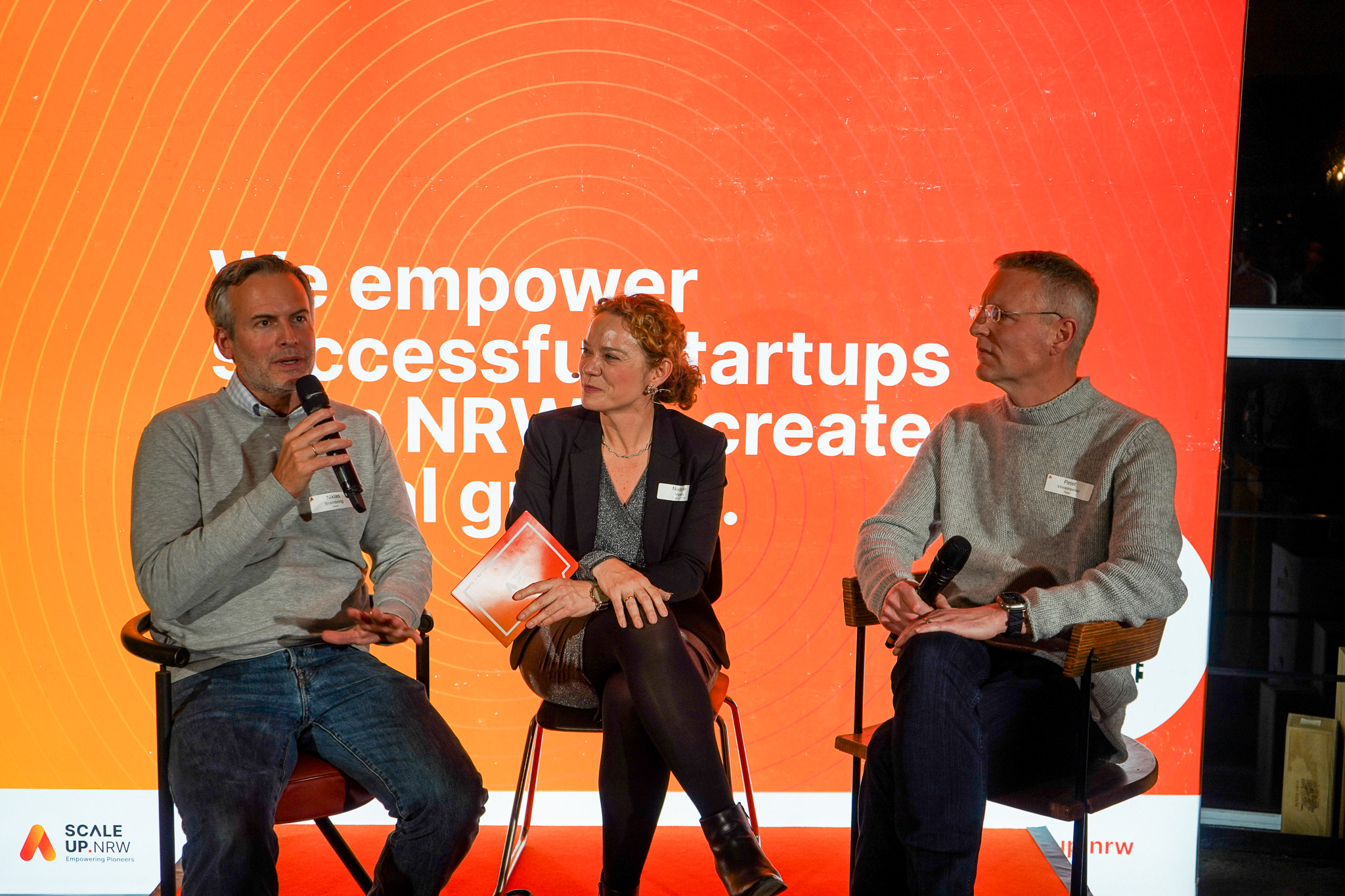

One of Zattoo’s most consequential strategic choices was, as Niklas Brambring explains, the decision to develop a profound understanding of the television industry before attempting any form of innovation within it. From the outset, the ambition was never disruption for its own sake.
Rather than positioning Zattoo as an adversary to broadcasters, the company deliberately chose a collaborative approach. The focus was on creating solutions that added value for existing players instead of undermining their business models.
“We did not want to cannibalize TV broadcasters. We wanted to help them make internet streaming work for their business. That mindset fundamentally shaped our strategy.”
This industry aligned approach proved to be a critical foundation for long term trust, partnerships and ultimately sustainable growth.

Unlike large telecom providers, Zattoo could not rely on bundled offers to subsidize television through highly profitable internet subscriptions. This reality forced early clarity, as the company had to generate revenue directly from TV itself, with no alternative path available.
“We had to earn money with TV itself. There was no other option.”
Zattoo therefore focused on a direct to consumer model that worked within these constraints and proved profitable in a defined niche. At the same time, Niklas describes how the realization of the structural disadvantages of competing with players able to give TV away for free prompted a fundamental reassessment of where the company’s true strengths lay and how they could be applied in a different way. The answer was the development of a complementary business to business model, offering Zattoo’s technology to network operators instead of competing against them.
During periods of intense market hype, particularly around video on demand, Zattoo made a conscious decision to resist prevailing industry pressures. Niklas recalls that there were moments when everyone advised the company to move into video on demand or invest in proprietary hardware, yet the team deliberately chose not to pursue either path. While many competitors diverted substantial resources into expensive content acquisition or complex hardware strategies, Zattoo maintained a clear strategic focus on TV distribution, prioritising long term coherence over short term trends.
“We knew this was our core competence. We kept investing there and kept getting better.”
That discipline enabled Zattoo not only to serve end users effectively but also to build a strong and scalable B2B offering. In hindsight, Niklas considers this focus far more profitable than attempting to compete with global platforms on their own terms.
Zattoo did experiment with international expansion, including ventures in the United States and Africa. Both were not successful. The key lesson was not to avoid mistakes, but to limit their potential damage. Zattoo tested new markets in a way that allowed learning without risking the company’s survival.
“Those were flops. But they were manageable flops.”
Niklas notes that several competitors placed very large bets that came close to destroying their businesses. Against this background, he draws a clear distinction between B2C and B2B expansion. Consumer markets require sustained brand building, local content agreements and complex advertising relationships.
B2B, by contrast, allows technology to scale with fewer structural frictions. By working with partners that already manage customer relationships, content and monetisation, cross border growth becomes more controlled, realistic and resilient.
After nearly two decades at Zattoo, Niklas sees strong value in supporting the next generation of scaleups.
“I have seen a lot. From tough sales decisions to complex people issues. We made serious mistakes and learned from them.”
What is most motivating for Niklas about the Scale-up.NRW Community is its clear focus on companies beyond the idea stage. These are not early experiments, but established businesses confronting mature challenges such as growth, leadership, organisational development and internationalisation. In this context, the greatest impact comes from contributing experience and perspective, not merely capital.
Niklas Brambring’s journey underscores a powerful message. Sustainable success is rarely driven by speed or hype. It is built through strategic clarity, realistic business models and the discipline to stay focused when others chase trends.
For the Scale-up.NRW ecosystem, his insights reinforce the importance of peer exchange and experienced mentorship. In complex growth phases, the right perspective can be as valuable as funding itself.
.jpg)